(Re)in Summary
• Singapore-flagged Dali collided with a pillar of Baltimore’s Francis Scott Key Bridge, causing a large segment to collapse.
• Incident difficult for International Group of P&I Clubs despite up to US$3.1bn excess-of-loss reinsurance programme, with
AXA XL the lead reinsurer on first layer of cover.
• Multiple estimates suggest costs could run into billions, making the incident one of the most costly maritime events ever.
• US$100m GXL attachment point means reinsurers will bear bulk of insured cost, but hit to any individual reinsurer unlikely to be significant, with risk understood to be spread across approx. 80 reinsurers.
• Complex claims will include array of (re)insurance entities across property, cargo, liability, trade credit, and other lines of business.
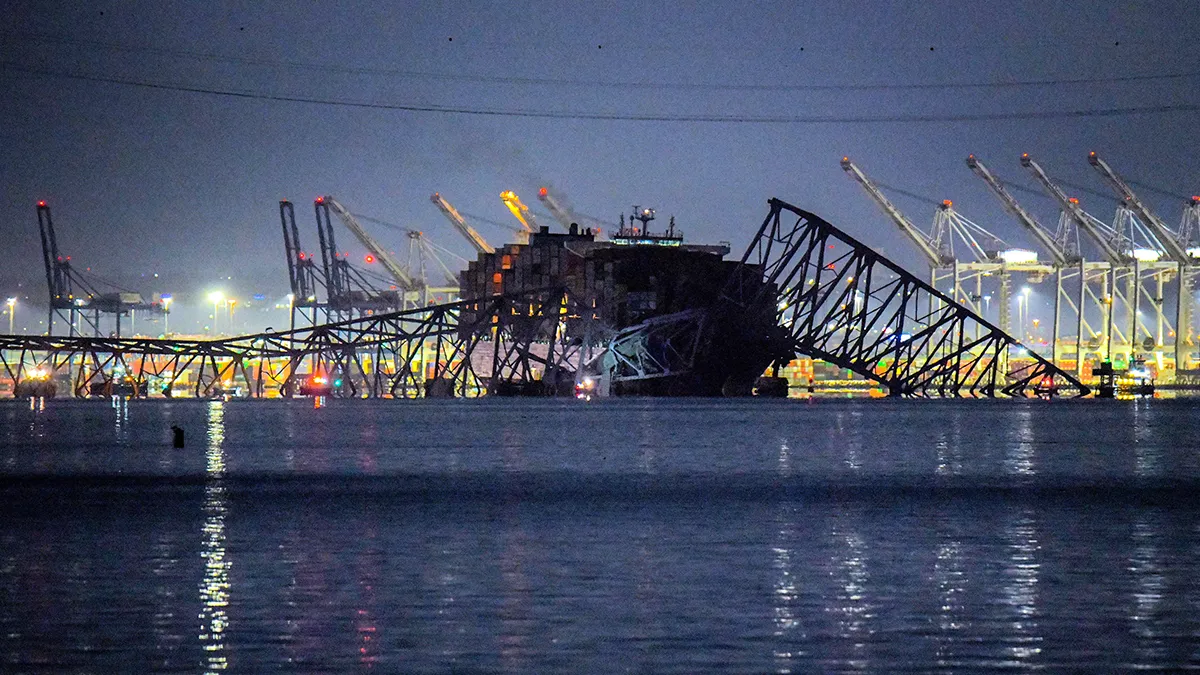
A collision involving the Singapore-flagged container ship Dali and a pillar of Baltimore’s Francis Scott Key Bridge has led to a catastrophic collapse, with billions of dollars in damages expected, with reinsurers poised to shoulder the majority of claims costs.
Dali (IMO: 9697428), a Singapore-flagged container ship, collided with a pillar of Baltimore’s Francis Scott Key Bridge at around 1:30am local time on Tuesday morning. The collision caused a large segment of the bridge to collapse, leading numerous vehicles and up to 20 individuals to fall into the Patapsco River. Six people are still reported missing as of Wednesday.
Britannia P&I Club, part of the International Group of P&I Clubs (IG), is Dali’s protection and indemnity insurer. IG insures approximately 90% of the world’s sea tonnage and as part of the group’s pooling arrangements, member clubs mutually reinsure each other by sharing claims above US$10m. It also has a reinsurance programme with the open market.
Loretta Worters, a spokesperson for the Insurance Information Institute told S&P Global that the value of the bridge itself could be about US$1.2bn. She added that the incident would impact the International Group of P&I Club the hardest, despite its reinsurance programme, which has AXA XL as the lead reinsurer for the first lay of cover.
Matilde Jakobsen, Senior Director of Analytics at AM Best, commented on insurance-specific implications following the bridge’s collapse.
“The insurance issues due to the collapse of the bridge will take a long time to determine and may involve several lines such as property, cargo, liability, trade credit and contingent business interruption.”
Jackobsen said the International Group of P&I Clubs buys general excess-of-loss reinsurance cover up to US$3.1bn in the open market.
“While the total cost of the bridge collapse and associated claims will not be clear for some time, it is likely to run into the billions of dollars—well above the US$100m attachment point for the GXL contract.”
“Reinsurers will bear the bulk of the insured cost of the collapse of the Francis Scott Key Bridge in Baltimore,” Jackobsen notes.
She adds the claim will be complex, involving several insurers, reinsurers, subrogation, and legal issues, which will serve to add to the increasing challenges of reinsurance availability.
“While the total claim is expected to be high, it is unlikely to be significant for individual reinsurers since it will be spread across so many,” Moody’s Ratings Analyst Brandan Holmes said, adding that approximately 80 different reinsurers cover the ship’s insurers.
“Depending on the length of the blockage and the nature of the business interruption coverage for the Port of Baltimore, insured losses could total between US$2bn and $4bn,” estimates Marcos Alvarez, Managing Director for Morningstar DBRS, speaking to Reuters.
Accident under investigation
The cause of the incident is still under investigation, though Baltimore Police Commissioner Richard Worley played down early fears of a potential terrorist attack, saying, “There is absolutely no indication that there’s any terrorism, that this was done on purpose.”
Skytek data indicates the vessel hit the bridge while travelling at over 7.5 knots, causing a 3km section of the bridge to collapse. YouTube videos appear to show the vessel experiencing mechanical issues, with lights going dark twice before hitting the bridge. Black smoke from the stack prior to the collision may also indicate an attempt to slow down.
To complicate matters, the collapse is likely to have significant implications for the Port of Baltimore. According to a Maryland government website, the Port saw 52.3 million tons of foreign cargo, valued at US$80.bn, including 847,158 cars and light trucks, in 2023.