(Re)in Summary
• Tropical Cyclone Alfred made landfall as a Category 1 storm, causing severe flooding, power cuts to over 295,800 properties, and widespread evacuations.
• Wind damage was minimal, but heavy rainfall remains a key threat, with forecasts of up to 800mm in some areas, increasing flood risks in southeast Queensland and northeast New South Wales.
• Over 19,000 people evacuated, at least 29 rescued from floods, and one person reported missing.
• Insurers had taken proactive measures, placing disaster response teams on standby and scaling up local operations in advance of Alfred hitting the region.
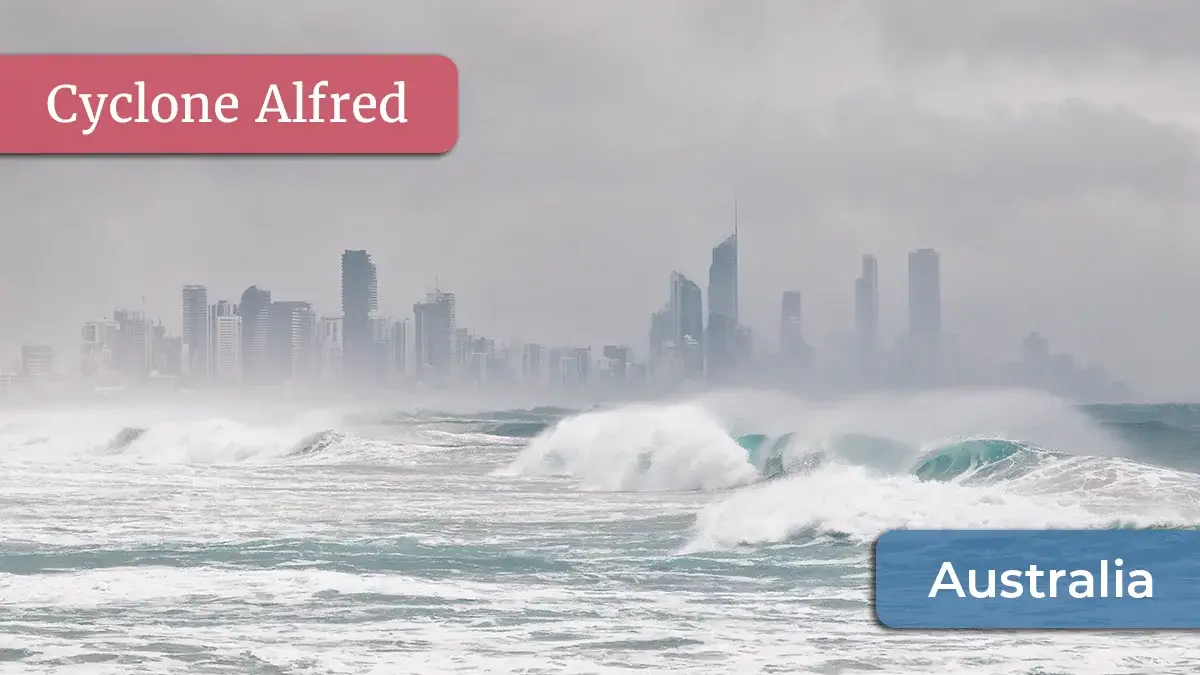
Tropical Cyclone Alfred made landfall in Southeast Queensland on Saturday morning, leaving over 295,800 homes and businesses and triggering severe flooding that has necessitated numerous rescues with at least one person missing.
Initially expected to make landfall as a Category 2 cyclone, Alfred weakened to a Category 1 system before crossing the coast near Moreton Island, northeast of Brisbane. It was further downgraded to a tropical low shortly after landfall.
The storm’s slow movement over the last two days had shifted concerns from strong winds to the potential of persistent and heavy rainfall, which is forecast to reach totals of up to 800mm in some areas, posing a significant risk of severe flooding.
As the storm’s heavy rainfall continues, over 19,000 people have already been evacuated from low-lying homes, with the NSW State Emergency Service reporting that at least 29 have been rescued from floodwaters, with one person reported missing after being swept away by a river.
On Wednesday, S&P issued a preliminary estimate of potential insurance losses, indicating that the cyclone could result in industry losses in excess of A$2bn (US$1.25 billion) based on historical events and how the storm was tracking at that time. However, whether losses get anywhere near that figure will depend on the severity of rainfall in the coming days.
The Insurance Council of Australia on Friday noted that insurers had placed disaster response specialists on standby and have scaled up operations in preparation for the cyclone. IAG said that it proactively contacted hundreds of thousands of customers before Alfred made landfall, and it has also mobilised trans-Tasman support with members from its New Zealand team travelling to the region to help assess property damage.
The Bureau of Meteorology said that ex-Tropical Cyclone Alfred continues to pose a significant risk, emphasising that, while the storm’s downgraded category reflects wind strength, the risk of severe weather, including heavy rainfall and flash flooding, remains high across southeast Queensland and northeast New South Wales.