(Re)in Summary
• Houthi rebels attacked the Singapore-flagged LOBIVIA (IMO: 9228564) in the Gulf of Aden, causing fire and damage, but all crew are safe.
• The ongoing attacks have led to higher war risk rates and potential insurance cancellations, affecting global trade routes.
• Ships linked to various countries, including China and Russia, face increased risks despite previous discounts on war risk rates.
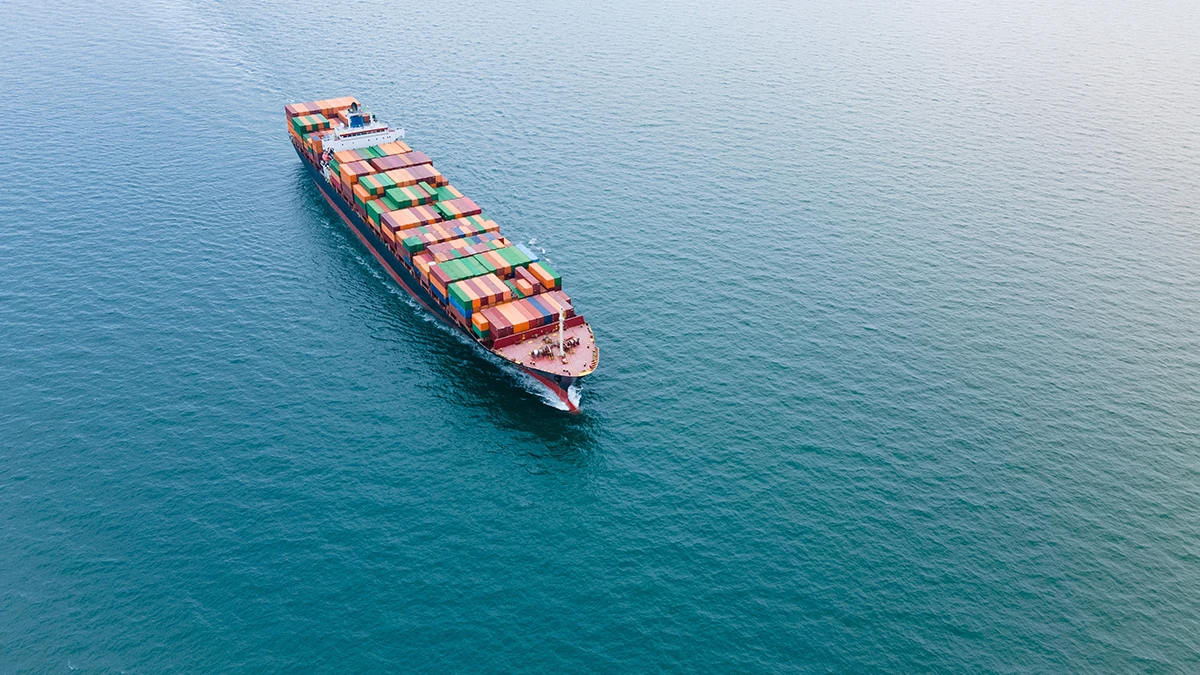
Yemen’s Houthi rebels continue to intensify their campaign against global shipping attacking a Singapore-flagged container ship, LOBIVIA (IMO: 9228564), in the Gulf of Aden on Thursday.
The ongoing attacks in the Red Sea and Gulf of Aden, as well as a more recent expansion into the Indian Ocean, continue to raise concerns about supply chain disruptions and the impact on global trade routes. They are a key contributor to the rising costs associated with a ‘spiral of risk‘ that marine insurers face.
The 2001 LOBIVIA, insured by The Swedish Club according to the International Group of P&I Clubs database, was struck by missiles while transiting the Gulf of Aden, approximately 83 nautical miles southeast of Yemen’s port city of Aden.
The Maritime and Port Authority of Singapore (MPA) said it was notified about the attack at 10.30 am SGT last Thursday. The authority said the crew extinguished the fire onboard and that all crew members were accounted for and safe.
“LOBIVIA is moving under her own propulsion and has arrived at Berbera Port, Somalia to assess the damage and repairs needed,” the MPA added.
A Houthi military spokesperson, Yahya Saree, took to television to claim responsibility for the attack, stating that the group launched ballistic missiles and drones towards the LOBIVIA.
Mark Watts
Lead APAC Underwriter for Marine at Allied WorldThe Houthis’ campaign has severely disrupted global trade and resulted in a surge in war risk insurance rates. In response, some ship owners have tried to avoid the Red Sea and Gulf of Aden regions, with larger shipping companies choosing to reroute vessels via the Cape of Good Hope.
However, a recent expansion into the Indian Ocean has further unsettled APAC underwriters. “Asian insurers will likely be keeping an eye on how the Joint War Committee and broader London market reacts,” Mark Watts, Lead APAC Underwriter for Marine at Allied World, told (Re)in Asia last month (see story below).
“If the current trend continues, insurers could potentially issue notices of cancellation for war and strikes cover or impose exclusions for vessels that have links to the UK, US or Israel,” he added.
Gerald Feierstein
Director of the Arabian Peninsula Affairs Program at the Middle East InstituteEven ships linked to China, Hong Kong, and Russia, who have enjoyed an up to 50% discount on war risk rates due to a Houthi promise not to target them, have not been safe from attack.
The MV Huang Pu Suezmax tanker was struck by a Houthi missile on March 23. While this was likely due to a case of misidentification, the incident underscores the dangers that all vessels face when transiting through the area.
“Their capacity, their access to more sophisticated weapons, has only increased over the course of this conflict,” said Gerald Feierstein, Director of the Arabian Peninsula Affairs Program at the Middle East Institute in Washington, on Friday.
As the conflict continues, insurance rates are expected to remain high for ships transiting through the danger areas. The Houthis have stated that they will stop attacking ships when Israel ceases operations in Gaza, but it is unclear when this might happen.
The situation highlights the broader geopolitical tensions in the region and the need for coordinated international efforts to ensure the safety of global shipping routes.