(Re)in Summary
• Senior officials at the Ministry of Ports, Shipping and Waterways have begun discussions around establishing an Indian Protection and Indemnity (P&I) entity, according to a recent report.
• The idea of an Indian P&I club was first proposed in 2021, with an Indian state-run insurer already providing P&I cover to domestic vessels sailing within Indian waters since 2018.
• While India’s shipping industry remains relatively small in size, it has demonstrated steady growth over the years, with the total fleet size reaching 1,520 vessels in 2022.
• An Indian P&I club will likely start on a modest scale by catering mainly todomestic and coastal shipping operations, said the chief of the Indian National Shipowners’ Association.
Senior officials at the Ministry of Ports, Shipping and Waterways in India have commenced discussions around setting up a domestic protection and indemnity (P&I) entity, according to a report in The Hindu Business Line.
Ministry officials are working to develop some foundational elements for a P&I entity, including a seed fund. They intend to have “some structure” to these ongoing discussions over the next few months, reported the paper.
“We are exploring the possibility of having an Indian P&I entity that domestic shipowners can access,” an official said.
A P&I club functions as a mutual insurance association, facilitating risk-pooling, information sharing and representation for its members. It provides coverage for wide-ranging liabilities faced by shipowners, charterers, freight forwarders and warehouse operators, such as cargo damage caused between voyages, war risks and environmental damage like oil spills.
Plans for an Indian P&I club are not new. In 2021, discussions were reportedly held between India’s Insurance Regulatory and Development Authority and the Indian National Shipowners Association to develop a domestic club. Additionally, India’s state-run New India Assurance Company has offered P&I coverage to local vessels engaged in domestic trades since 2018.
Most recently, in October last year, India’s finance minister Nirmala Sitharaman called for the country to establish its own fully-fledged P&I entity to mitigate vulnerabilities from international sanctions and allow forgreater strategic flexibility.
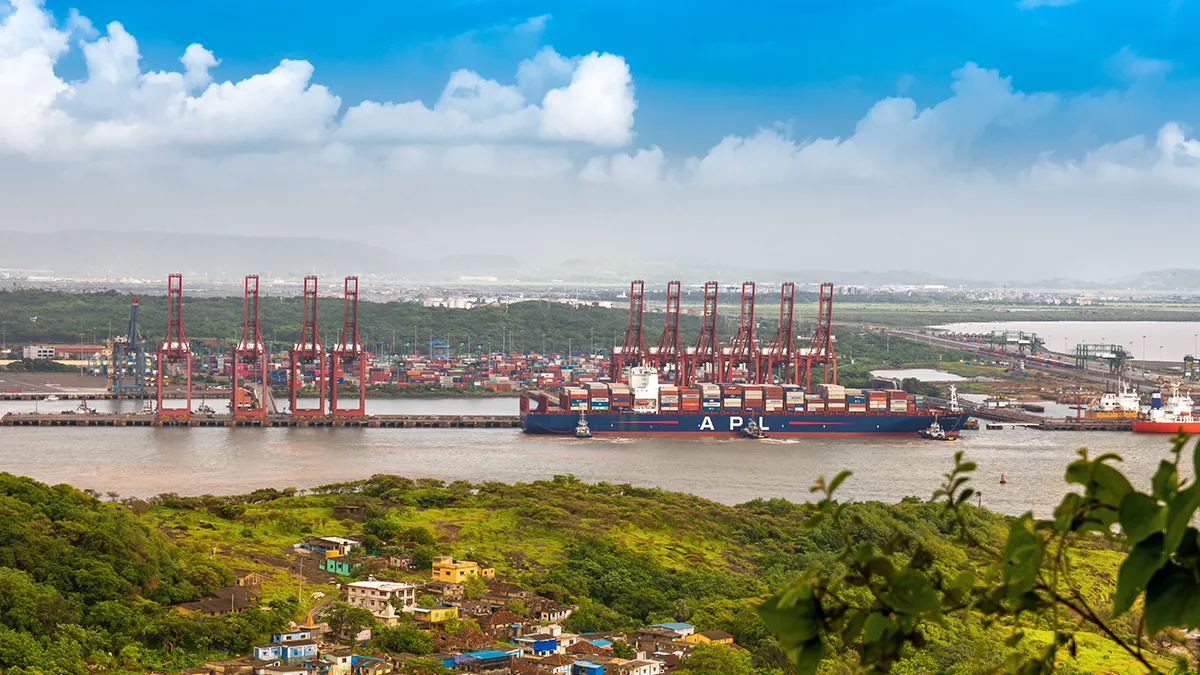
However, the size of India’s fleet engaged in both coastal and overseas shipping remains small. It comprises 486 vessels for foreign trade with a gross tonnage of 12.11 million, alongwide1,034 ships used largely for coastal operations.
An independent marine insurance supply chain
Insurers have expressed interest in establishing a larger domestic marine risk pool to cover shipments of commodities like sea-borne oil from Russian – a key supplier for India.
In 2022, India’s GIC Re set up a 5bn rupee (US$60m) reinsurance pool to provide reinsurance for fertiliser exports from Russia, Belarus and Ukraine. India’s general insurers have since sought to expand this pool to include crude oil and other materials from the region.
The United States sanctioned three oil tankers in November for transporting Russian Sokol crude above the US$60 per barrel price cap set by the Group of Seven nations following Russia’s invasion of Ukraine. The European Union and the United Kingdom have also banned insurers and reinsurers from covering shipments of Russian oil.
Other regional conflicts threaten to drive up marine insurance costs as well. In December last year, Yemeni rebels struck the MV Saibaba tanker off Yemen while the Gabon-flagged vessel was headed to India, prompting expectations of rising costs after London insurers expanded high-risk areas in the Red Sea.
An Indian P&I club could eventually provide indemnity insurance coverage for ships operating on international trade routes. This would reduce India’s vulnerabilities amid situations where insurance is denied to shipping lines from sanctioned countries, as was the case with Russia.
While the European Union and the United Kingdom ban posed challenges, India still managed to boost Russian crude imports by facilitating shipping and insurance arrangements through Moscow.
Inland waterways as a start
For now, the proposed India P&I club will focus on fleet operations within inland waterways, according to Anil Devli, CEO of the Indian National Shipowners’ Association.
“This entity should build expertise before we start providing coverage for global shipping lines,” Devli told Livemint.
Insurance for overseas oil tankers can be astronomically high, Devli said, with coverage and accidental damage for a single tanker potentially reaching US$8bn – a difficult target for any domestic operator.
“Coastal and inland shipping demands are much smaller and don’t need such large-scale support from an India-based P&I,” said C.R. Vijayan, deputy secretary general of the General Insurance Council. He added that around 90% of Indian-owned vessels currently sails under foreign flags.
Regulatory mandates compelling Indian-flagged tonnage to obtain P&I insurance locally would be crucial, experts told The Economic Times in October last year. The key is establishing a club that attracts global reinsurers, according to a former finance director at a major Indian shipping company.