(Re)in Summary
• Thai insurance losses from the March 2025 Myanmar quake, estimated at THB 20–30 billion, will mostly be covered by reinsurers says S&P.
• Stronger reinsurance protection since the 2011 floods has reduced local insurers’ exposure.
• Reinsurance premiums are expected to rise, which may squeeze Thai insurers’ margins.
• Low earthquake coverage and improved risk modelling will shape future market responses.
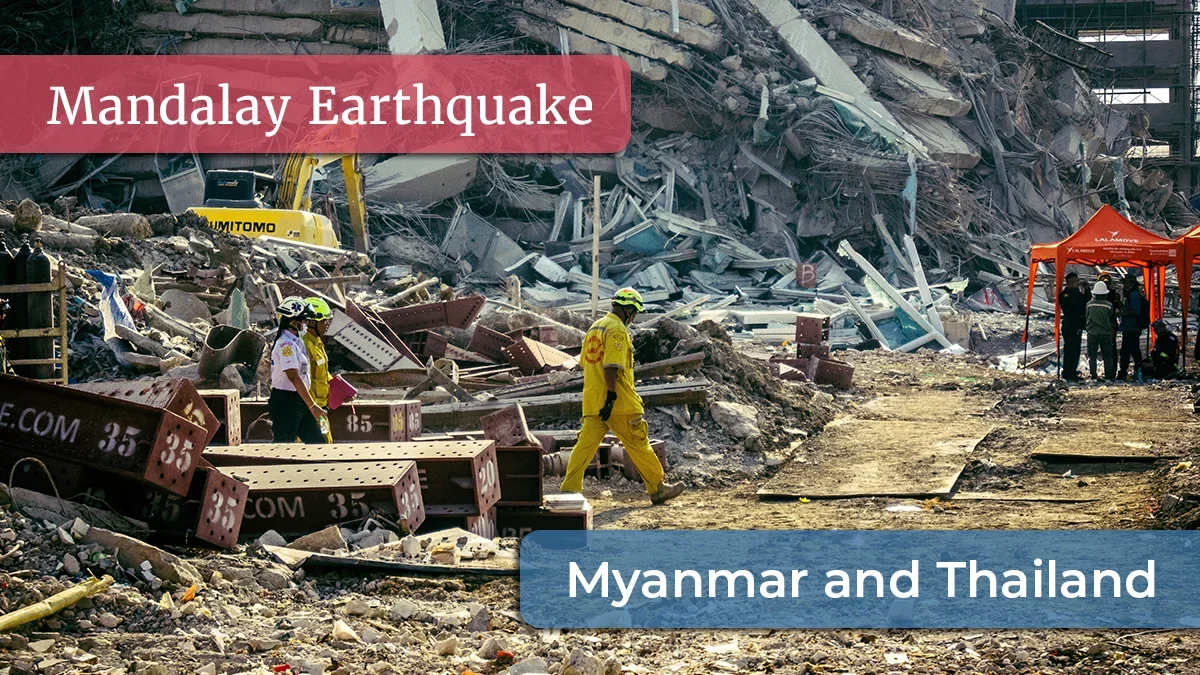
The bulk of insured losses incurred by Thai property and casualty (P/C) insurers following the March 2025 earthquake in Myanmar are expected to be covered by global and regional reinsurers, according to a new report by S&P Global Ratings.
The 7.7-magnitude quake, which caused structural damage in parts of Bangkok, is estimated to have led to insurance claims totalling between THB20bn (US$597.6m) and THB30bn, S&P said. While significant, these losses are notably smaller than the THB150bn in COVID-related payouts in 2022 or the THB500bn in claims from Thailand’s 2011 floods.
“Over the years, many Thai insurers have increased their reinsurance coverage to safeguard against natural catastrophe losses following a major flood in Thailand in 2011,” said Billy Teh, credit analyst at S&P Global Ratings. “We believe these efforts will help cap their final losses from a recent earthquake in neighbouring Myanmar that also caused damage in and around Bangkok.”
Despite the relative manageability of losses for local insurers, S&P expects the event to put upward pressure on reinsurance premiums.
“As reinsurers are likely to bear the brunt of the earthquake losses, we foresee a rise in reinsurance premium rates, for the industry in Thailand,” Mr Teh said. “Consequently, the profit margin for Thai P&C insurers may compress over the next two years, unless they maintain profitability through a combination of volume growth and better risk selection.”
Low take-up of earthquake-specific coverage among policyholders has also helped limit claims. S&P further anticipates that the event could lead to broader risk modelling improvements and product expansion, including refinements to seismic risk models based on soil conditions and building structures.
Separately, Moody’s suggested that the Myanmar earthquake has prompted insurers to review earthquake risk in urban centres traditionally seen as low hazard due to their distance from seismic zones, as the event showed that cities with certain soil and structural conditions can still suffer significant damage.