



The deployment of insurance capital is becoming increasingly selective, with capacity increasingly directed towards specific risks. This creates an opportunity for Lloyd’s to strengthen its regional presence through greater market access, collaboration and innovation.
“As the market cycle develops, our focus, both now and into 2027, is on ensuring that market participants in Asia have easy access to Lloyd’s across its global footprint,” says Emma Loynes, Lloyd’s CEO for Asia-Pacific, Middle East and Africa. “That means reducing friction in areas such as reporting and barriers to access, as well as reviewing cost structures that we may have had in place previously.”
While Singapore remains an important hub for Lloyd’s, only around 15% of the business that syndicates write in the region is based here.
“Our market participants write business across the wider region, so they need to be able to access all our regional platforms as efficiently as possible,” says Loynes.
A large part of this involves raising awareness of what the Lloyd’s marketplace can offer. Another part is innovation, with Lloyd’s seeking to bring some of the work undertaken at its London-based Lloyd’s Lab to Singapore.
Then there is collaboration. Last month, Lloyd’s joined the Greater Asia Insurance Partnership (GAIP), a platform bringing together industry, regulators and governments to explore ways of addressing the region’s increasingly complex and interconnected risks.
“Capital is of course at the forefront of what we do in the industry, but it is only part of the story,” says Loynes. “A lot also comes down to capability and deploying capital where there is a clear need or opportunity. By bringing together different markets, capabilities, expertise and risk appetites, we can provide the specialist capacity required, or develop more nuanced, structured products to meet those needs.”
“That means reducing friction in areas such as reporting and barriers to access, as well as reviewing cost structures that we may have had in place previously.”
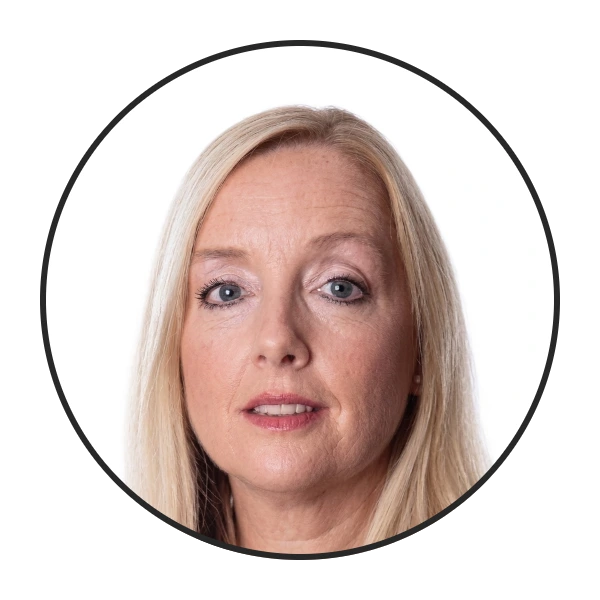
Emma Loynes
Lloyd’s CEO for Asia-Pacific, Middle East and Africa
Outreach and education
APAC has a long history of regulatory restrictions that have limited access to certain markets and constrained the ability of international insurers to operate. Some of these restrictions are now easing. As they do, a new challenge is coming into focus: ensuring that brokers and other market participants understand how to access and make the most of the Lloyd’s platform. This is why Loynes is so keen to place education and outreach at the heart of Lloyd’s APAC strategy.
“This isn’t about us, as Lloyd’s, trying to work out where we should go. It’s about us working in partnership with the market to understand where we can add most value, and where it makes most sense for us to deploy our time and energy,” says Loynes.
This means not only engaging with new clients but deepening relationships with existing ones. For example, a market participant looking to write Japanese business may not realise that Lloyd’s has a local platform there, or understand how it can provide access to the market.
Lloyd’s held its first “Meet the Market” event in Japan this year, attracting more than 100 participants. This was followed by a similar event in Taipei. Loynes says that both events were successful in bringing the local broking community closer to Lloyd’s and showcasing the routes to market and specialist expertise available through its platform.
Korea is another area of interest and Lloyd’s is looking to expand its engagement there, although the licensing regulations are more restrictive.
In Hong Kong, meanwhile, Lloyd’s has been working with the Hong Kong Confederation of Insurance Brokers to convene a series of events over the past 12 months, with further collaboration under consideration.
“Capital is of course at the forefront of what we do in the industry, but it is only part of the story.”
Emma Loynes
Lloyd’s CEO for Asia-Pacific, Middle East and Africa
Innovation
Just as important as outreach is innovation, with Lloyd’s looking to bring the expertise and ideas developed through its London-based innovation hub closer to the needs of the Asia-Pacific market.
“The Lloyd’s Lab has become a core part of our proposition and ecosystem, and we’re continuing to invest in it. At the same time, Singapore is a big innovation centre, so there was growing interest to look at how we could bring some of what we are doing in London over to the market,” says Loynes.
Having considered a number of ways to bring the innovation model to the region, Lloyd’s settled on a proof of concept in Singapore. The idea was to take the ethos and blueprint of the Lloyd’s Lab in London and test how it could be applied in a local market, rather than simply replicate the model.
This began with discussions with market participants to identify where innovation could make the biggest difference and which practical challenges were most in need of attention. One of the key issues that industry felt needed immediate attention was data standardisation and the digitisation of manual back-office processes.
“The focus was on underwriting data, premium data and accounting reconciliation, as well as how bordereaux [the periodic reports that detail policies, premiums and claims] come into the market. A lot of this information is unstructured and comes in different formats. There are still many manual processes and a lot of human intervention. While some digitisation has taken place, it is very piecemeal,” says Loynes.
Having completed the proof of concept, Lloyd’s will assess the findings and consider how the model could be developed further in Singapore and potentially replicated across other parts of its global network. The findings are expected to be set out in a report next year, which should provide a clearer picture of the outcomes and the potential for taking the initiative forward.
“Singapore is a big innovation centre, so there was growing interest to look at how we could bring some of what we are doing in London over to the market.”
Emma Loynes
Lloyd’s CEO for Asia-Pacific, Middle East and Africa
Collaboration
The third pillar in Lloyd’s approach to the APAC market is collaboration.
“When I joined the platform three years ago, market participants were not collaborating at the level they are today,” says Loynes. “What we’ve realised is that our ability to have an impact and compete in the market is much greater when participants are prepared to pool their capacity. We’ve seen a real increase in that pooling, bringing together different capabilities and areas of expertise to address risks collectively.”
This need for collaboration becomes even more pressing as the complexity and uncertainty of risks increase. As exposures become more interconnected and difficult to assess in isolation, no single participant may have all the capacity or expertise needed to provide an effective solution. Pooling allows the market to bring together different sources of capital, specialist knowledge and risk appetites, strengthening its ability to respond to emerging and increasingly complex risks.
“There is a lot of uncertainty in the world at the moment, but there is a real desire to look at how we structure solutions differently,” says Loynes. “Public-private partnerships are going to be fundamental to addressing the very complex and interconnected risk environment we are operating in.”
It is this realisation that has inspired Lloyd’s to join the Greater Asia Insurance Partnership (GAIP), which provides a structured forum for engagement with regulators, governments and industry bodies across the region. Loynes said the move reflects a recognition that the increasingly complex and emerging risks facing Asian markets cannot be addressed by individual organisations working in isolation. Membership gives Lloyd’s an opportunity to bring its specialist underwriting expertise to wider industry discussions, learn from other participants and help develop practical, collective responses to these challenges. For Loynes, the aim is to ensure that collaboration leads to tangible action, rather than simply discussion.
“I genuinely believe that challenge brings opportunity. Capital undoubtedly flows to where the opportunity lies, but without the capability and innovative thinking, you can’t deploy it effectively,” says Loynes. “It may sound like a cliché, but I think that is particularly true of the environment we are operating in today.”