(Re)in Summary
• China accounted for nearly two-thirds of global electric vehicle (EV) sales in 2024, up from just over half in 2021, creating new opportunities and risks for global motor insurers.
• Global insurers are seeking partnerships with Chinese EV makers to gain expertise and manage underwriting losses.
• Differences in technology, repair costs, and data sharing between Chinese and Western new energy vehicles (NEVs) mean insurers must adapt their underwriting and risk assessment approaches for each market.
• (Re)insurers say success in NEV insurance depends on strong partnerships, access to local data, and understanding evolving risk profiles as Chinese manufacturers expand overseas.
Chinese electric vehicle sales are surging around the world, yet underwriting losses in the home market remain significant. Global insurers hope to strengthen underwriting by deepening Chinese partnerships.
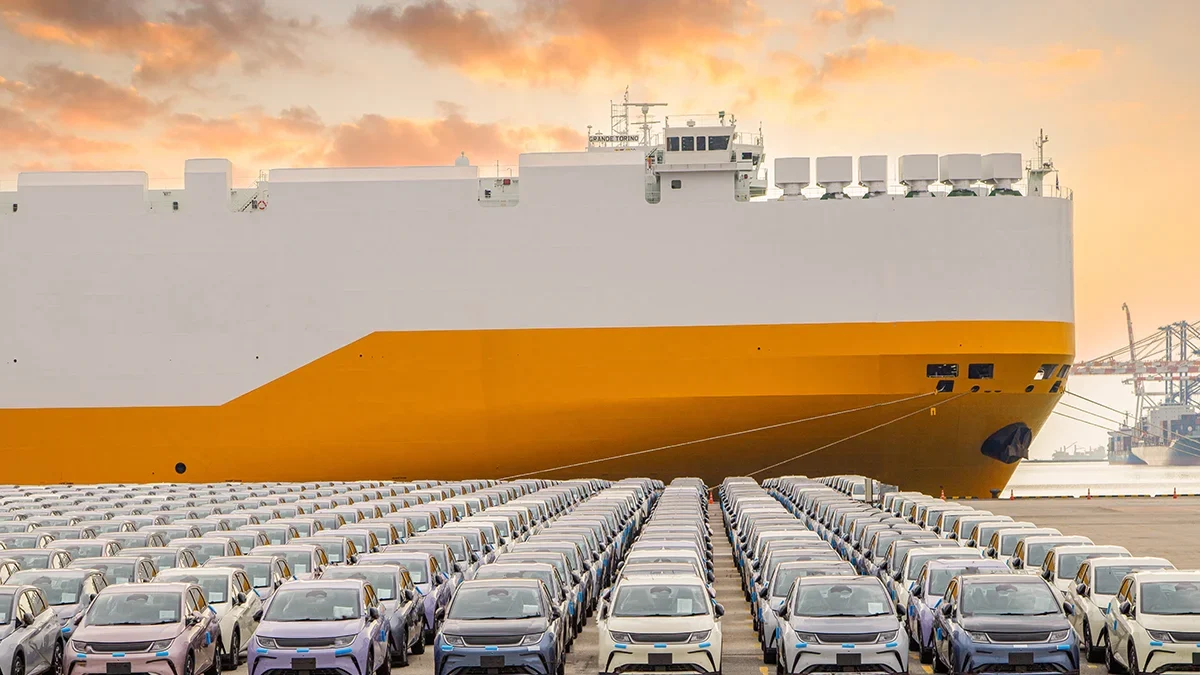
China accounted for nearly two-thirds of electric vehicles (EVs) sold in 2024 worldwide, according to the International Energy Agency. This is a significant increase from 2021, when just over 50% of new EV sales globally came from China.
This creates a tremendous opportunity for global motor insurers. However, they are also keen to avoid the kind of underwriting losses that have consistently been seen on the Chinese market.

Beat Strebel
Country President for China, Swiss Re“European car dealers and European insurers need to create an understanding of the product they are underwriting. Car features, driver behaviour, the value chain of repair parts — this is a whole new ecosystem that is being created,” says Beat Strebel, Swiss Re’s chief executive of Reinsurance China and country president for China.
“The obvious danger is that international insurers go through the same evolution that China has experienced, with higher claims incidents. But many Chinese companies have accumulated knowledge and data that can now be exported to European and American markets,” he adds.
Official data suggest that in 2024, the combined operating ratio (COR) for insuring new energy vehicles (NEVs) within China was 107%. Although this is an improvement on the 109% COR that was seen in 2023.
Much of these losses are due to the newness of the technology, higher repair costs, and outdated models that fail to account for the evolving risk profiles of these vehicles. Strebel thinks that losses will level off further in 2026, as market knowledge continues to improve.

Jon Ford
APAC Head of Partnerships, Zurich InsurancePursuing partnerships
It is this deepening expertise that international insurers are now competing to acquire.
“Partnerships with OEMs (original equipment manufacturers) and the wider EV ecosystem are central to our NEV strategy,” says Jon Ford, head of partnerships for APAC at Zurich Insurance. “As Chinese manufacturers expand internationally, we are working with them to support market entry by navigating local or regulatory requirements, consumer protection frameworks, and insurance structures across different jurisdictions.”
This extends beyond vehicle manufacturers to the broader NEV ecosystem, including charging infrastructure and local assembly operations.
In January 2025, Zurich Insurance announced a partnership with Chinese EV company Zeekr to offer tailored insurance policies for drivers of this vehicle.
Allianz Partners is taking a similar approach. In March 2025, the insurer joined forces with Chery International, another Chinese manufacturer of NEVs, to offer bespoke policies to its customers.
“Our partnership with Chery International allows us to deepen our understanding of EVs and their manufacturing processes in China. At the same time, Chery can leverage our expertise in insurance and assistance to enhance vehicle design and thereby facilitate easier and more cost-effective repairs,” says Pierre-Louis Cohet, head of business development automotive at Allianz Partners.

Pierre-Louis Cohet
Head of Business Development Automotive, Allianz PartnersThis collaboration has helped Chery strengthen its presence internationally. The manufacturer exported nearly a million vehicles to Europe during the first three quarters of 2025, representing a year-on-year increase of 12.9%, according to company data.
It also helps Allianz gain an advantage over its competitors.
“By collaborating with Chinese OEMs, we can leverage their rapid advancements to enhance our offerings and deliver new solutions in the automotive sector,” says Cohet.
He points out that the risk profile of European and Chinese NEVs can differ significantly, meaning that success in underwriting the former might not automatically translate into success with the latter.
“European regulations tend to be more stringent, influencing the design and functionality of vehicles sold in the region,” says Cohet. “Furthermore, parts management is done differently by Chinese OEMs compared to their European counterparts, with simpler systems, and therefore repairability can be challenging due to differing approaches and cost structures.”
Thibault Imbert, principal for insurance consulting for Munich Re, based in Singapore, says that there is a lot of attention on emerging partnership opportunities at the moment, as Chinese NEV manufacturers work out their optimal approach to overseas insurance.
He says that the (re)insurance industry needs to adopt a “proactive approach” to realigning motor books as Chinese manufacturers target multiple markets on a global scale.
He adds that while partnerships between the (re)insurance industry and NEV manufacturers are instrumental in tackling these new challenges, “only a handful of collaborations have become publicly known”.
More are likely to emerge as the battle of NEV insurance supremacy heats up.

Thibault Imbert
Principal for Insurance Consulting, Munich ReRisk and data
There are many similarities between the risk profile of Chinese NEVs compared to NEVs from elsewhere, but many differences, too. This is where global insurers will need to tread carefully. Furthermore, the risk profile of a Chinese NEV insured domestically can be materially different from the risk profile of one insured in overseas markets.
“The Chinese OEM landscape is very dynamic with a constant influx of new models and brands, and frequent technology developments. Some experts consider that Chinese NEV are currently three to five years ahead in terms of technology in comparison to incumbent OEMs,” says Imbert. “Additionally, while Chinese NEVs are on average more affordable than their Western counterparts, this is not directly reflected in the claims cost. The long-established assumption that vehicle value was a good indicator of claims costs is strongly challenged with the rise of Chinese NEVs.”
Imbert adds that it is therefore crucial for insurers to keep track of these developments and thoroughly understand the specificities of each new technological development.
He says the advanced integration of components can increase claim severity, making it a critical underwriting consideration. For example, the technique for chassis welding may impact repairability or the acceleration capabilities may affect the driving style.
While leveraging on manufacturers’ data will be crucial to success, much of this may depend on how data is gathered and used — and how much local partners are prepared to share.
“Many hurdles still exist when it comes to the usage of this data: accessibility of the data, capability to understand them or to derive relevant risk scoring,” says Imbert. “Market specificities come on top. Motor insurance can be quite different from one market to another and some findings in one market may not be relevant in another one.”
Allianz’s Cohet says that Chinese car manufacturers have exhibited “a remarkable openness to data sharing”, helping to create valuable opportunities for “piloting new projects, gaining insights directly from these vehicles, and developing innovative solutions for our customers”.
Zurich reports a similar pattern.
“As Chinese EV brands expand overseas and more data becomes available locally, these insights help insurers reduce uncertainty, improve underwriting accuracy, and anticipate emerging risk trends,” says Ford.
Future success will hinge on the strengths of the partnerships that these insurers have built up. The battle for Chinese NEV supremacy is only just beginning.