


(Re)in Summary
• MAS expects another round of RBC 2 adjustments before year-end as risks, market practices and international standards evolve
• Regulator is reviewing its reinsurance management framework, with enhanced guidance and requirements under consideration as AIR develops
• Insurers are being urged to adopt more bespoke stress testing for exposures including private credit and AIR
• Climate risk, operational resilience, third-party dependencies and AI governance are expanding the areas where actuarial expertise is needed
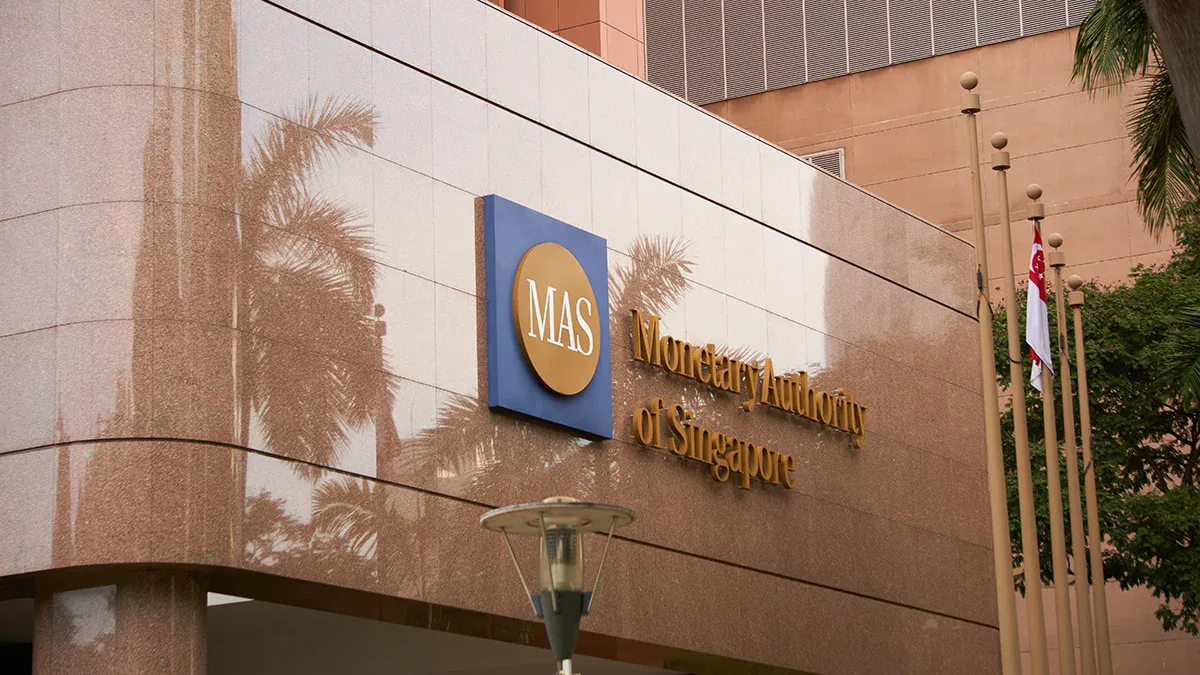
Singapore’s insurance regulator is reviewing its reinsurance management framework to account for developments including asset-intensive reinsurance (AIR), while further changes to its Risk-Based Capital 2 (RBC 2) regime are expected before the end of the year.
Speaking at the Asian Actuarial Conference in Singapore on Wednesday, Monetary Authority of Singapore (MAS) Supervisory Analytics Division Director and Head Lee Wai Yi said another round of RBC 2 adjustments is expected before year-end, with future changes likely to be made more frequently as risks, market practices and international standards evolve.
“It wouldn’t be 10 years… 15 years in the making for the next round,” she said. “It will have to be a case where we adjust as it goes because risks evolve. International market practices and international standards will also evolve.”
Singapore introduced its first RBC framework in 2004 before implementing RBC 2 in 2020. More recent changes have included a countercyclical adjustment for equity risk charges, greater granularity in the treatment of structured products and differentiated treatment for infrastructure investments.
MAS is separately reviewing its reinsurance management notice and considering enhanced guidance and requirements in response to developments including AIR.
Lee pointed to the IAIS’s paper on structural shifts in the life insurance sector, published late last year, which examined increasing allocations to alternative assets and rising adoption of cross-border AIR.
She said the work offered an early indication of the regulatory response to these shifts, potentially feeding into enhanced supervisory guidance, updates to the Insurance Core Principles and additional requirements.
“Ultimately, all this will translate into enhanced supervisory guidance expectations, updates in the insurance core principles, which may also translate down to more requirements from the regulator,” she said.
The IAIS work examined how insurers’ growing exposure to complex, illiquid and hard-to-value alternative assets could affect asset-liability management and liquidity, while highlighting AIR risks including structural complexity, concentration, counterparty exposure and potential constraints in the event of recapture.
Those developments come as AIR activity continues across Asia Pacific, with 10 deals recorded so far in 2026: eight involving Japanese cedants and two involving Hong Kong cedants. Pacific Life Re announced the latest AIR transaction this week, with its third asset-intensive flow reinsurance deal in Japan.
MAS pushes for more granular stress testing
Lee also urged insurers to move beyond stress testing conducted primarily for regulatory submissions and develop more bespoke and granular exercises reflecting their own exposures, particularly where they increase allocations to private credit or make greater use of AIR.
MAS is preparing further system-wide risk analysis to explore contagion risk across sectors, said Lee. Singapore was among the stronger performers in the IAIS’s latest assessment of jurisdictions’ implementation of its systemic risk framework, including in macroprudential supervision and cross-border crisis coordination.
“It is very important to do stress testing. It is not just stress testing for the sake of passing the industry-wide stress test under MAS or handing the report in the ORSA (Own Risk and Solvency Assessment) to MAS,” Lee said. “It is about doing more bespoke type of, granular type of stress testing, especially given the circumstances.”
The wider direction points to a growing role for actuaries outside traditional valuation and liability work. Lee highlighted climate risk, operational resilience, third-party dependencies and AI governance as areas where actuarial modelling and judgement are likely to become more important.
For climate risk, the regulator’s upcoming transition planning guidelines — which will be implemented by September 2027 — will require insurers to consider how physical and transition risks affect underwriting, pricing, reserving and investments over multi-year horizons, with MAS’s work on AI risk management setting expectations around areas including materiality assessments, system inventories and lifecycle controls.
New tools, new terrain, new needs
Alvin Tan, Singapore’s Minister of State for National Development and Foreign Affairs and an MAS board member, said in his address to the Asian Actuarial Conference that actuaries would need to respond to a risk landscape shaped by “new tools, new terrain and new needs”.
Tan pointed to AI and advanced analytics as new tools reshaping underwriting, claims and customer engagement, while geopolitical shifts, ageing populations, climate change, and changing consumer expectations were creating new demands around investment, retirement, healthcare and financial resilience.
By combining the use of facts with professional judgement, actuaries can become a “vital bridge” that translates complex AI outputs into clear insights, Tan said. “Taking the AI inputs, they evaluate and analyse these outputs and make it into something actionable.”
Actuaries must shift from just projecting past trends to preparing for tomorrow’s uncertainties, Tan added. Through stress testing portfolios and reserves against long-tail events and going beyond historical experience, actuaries can help insurers “rigorously evaluate long-term risks and maintain long-term resilience against the unexpected,” said Tan.
Munich Re’s Managing Director and Head of Life and Health for Southeast Asia and High Net Worth Akash Gupta, who opened the conference, similarly framed the profession around its ability to adapt as risks change.
“Actuaries have kept redefining what it means to take risk ever since,” Gupta said. “We price new risks, we reserve for risks already underwritten, and we set aside capital to withstand extreme events… making our societies resilient to shocks in the most efficient way possible.”