

(Re)in Summary
- Large multinational companies are increasingly reviewing standalone political violence cover as concerns grow over supply-chain disruption and operational resilience across Asia.
- Buyers are placing greater emphasis on policy wording, trigger mechanisms and exclusions as insurers warn similar unrest events can produce markedly different coverage outcomes.
- Underwriters remain willing to deploy capacity across the region, though scrutiny has increased around asset concentrations, supply-chain dependencies and politically sensitive territories.
- Insurers and brokers say the focus is shifting from simply purchasing strikes, riots and civil commotion (SRCC) coverage towards gaining certainty around policy response and closing potential protection gaps.
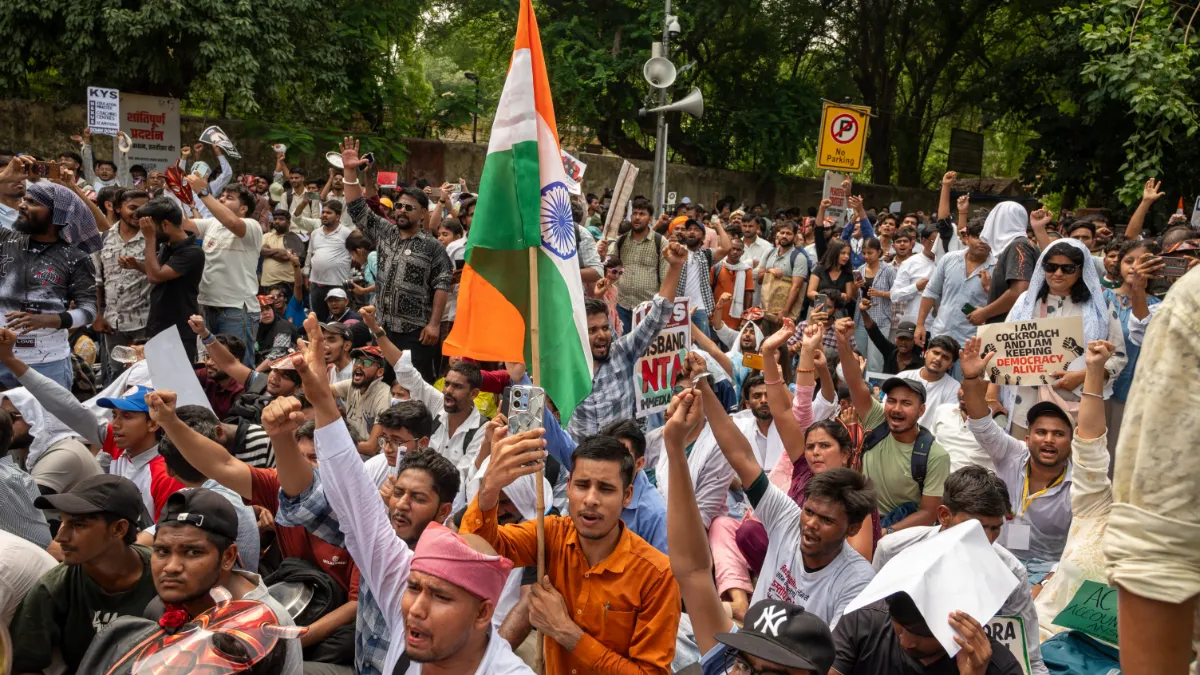
Recent protests and civil unrest events across parts of Asia are prompting companies to re-examine how their insurance programmes would respond to political violence, with market participants reporting growing interest in standalone cover and greater scrutiny of policy wording.
The shift appears to be driven by buyers looking to better understand how policies would respond if unrest evolves beyond conventional strikes, riots and civil commotion (SRCC) scenarios.
According to Adam Sullivan, CEO for specialty business in Asia at Gallagher, larger multinational organisations are increasingly assessing political violence and terrorism exposures as part of broader risk-management frameworks rather than viewing them solely as extensions to property insurance programmes.
“We’re seeing more sophisticated and complex buyers assessing political violence and terrorism exposures as part of their broader risk-management strategy.”

Adam Sullivan
CEO for specialty business in Asia at Gallagher
“We’re seeing more sophisticated and complex buyers assessing political violence and terrorism exposures as part of their broader risk-management strategy,” Sullivan said.
Echoing the view, Joe Gardner, Aon’s broking leader for crisis management, commercial risk solutions in Asia, added that factors such as geographic footprint, supply-chain exposure, risk-management maturity and the extent of cover available within existing property programmes influence buyers’ decisions on standalone cover.
India already has an established market for political violence and terrorism cover, while Vietnam could see increased uptake as manufacturers diversify supply chains and establish new operations across the region, he added.
“More broadly, awareness is increasing as unrest occurs in places that may not previously have been considered highly exposed,” said Gardner.
In February, WTW said that APAC will continue to face heightened crisis-related pressures in 2026, with SRCC as a core exposure across the region.
“More broadly, awareness is increasing as unrest occurs in places that may not previously have been considered highly exposed.”

Joe Gardner
Aon’s broking leader for crisis management, commercial risk solutions in Asia
Devil in the details
With evolving demand, buyers are also paying closer attention to policy wordings, trigger mechanisms and exclusions.
According to Henry Ang, head of terrorism for APAC excluding India and MENA at Markel, buyers are becoming increasingly focused on understanding exactly where coverage begins and ends, particularly as unrest events become more complex and harder to categorise.
Coverage can vary significantly between policies, with exclusions commonly addressing war, insurrection, rebellion, terrorism, nuclear risks and sovereign actions.
“The distinction between SRCC, terrorism and war is becoming more important,” Gardner said, noting that similar incidents can be classified differently under separate policies, creating the potential for disputes where exclusions apply.
The trend is also evident in India, where buyers increasingly are demanding certainty around how policies would respond if protests evolve into broader political violence events, prompting closer scrutiny of trigger mechanisms and peril definitions, said Rahul Gaglani, underwriter for war and terrorism risks for India at Markel.
The increased focus on coverage certainty is mirrored by changes in underwriting behaviour.
Market participants said scrutiny has increased around risks involving concentrated retail exposures, significant business interruption potential, critical infrastructure, vulnerable supply chains and territories experiencing elevated political tensions.
Gardner said underwriters are paying closer attention to markets such as Hong Kong, where previous unrest generated significant claims, alongside Indonesia, Thailand and Cambodia following recent social and political disturbances.
India is also attracting focus as manufacturing investment and supply-chain diversification increase concentrations of insured assets, while Vietnam is expected to receive greater attention as its role in regional supply chains expands, he said.
Ang added that underwriters are also focusing more heavily on accumulation exposures, urban asset concentrations and locations where a single event could affect multiple insureds simultaneously.
“Underwriters are also focusing more heavily on accumulation exposures, urban asset concentrations and locations where a single event could affect multiple insureds simultaneously.”

Henry Ang
Head of terrorism for APAC excluding India and MENA at Markel
Gaglani said digital communication channels and social media are also changing the nature of civil unrest, allowing localised incidents to spread more rapidly and across wider geographies than in the past.
Sufficient capacity remains available
Nonetheless, insurers are not withdrawing capacity from the market.
Sullivan said political violence and SRCC markets remain well capitalised, with meaningful support from both regional and global insurers.
“We’re certainly not seeing any shortage of appetite from insurers across the region,” he said.
(Re)in Asia reported in November 2025 that global political violence (PV) insurance capacity was rising despite increasing losses.
Instead, market participants describe a more selective underwriting environment. Ang said capacity remains broadly available for well-managed risks.
Aon’s Gardner echoed that view, noting that Asian buyers can access both regional and international political violence markets, including London capacity.
“It would be unusual for a client to require a limit for which capacity could not be found,” he said.
In India, underwriters continue to support the class but are placing greater emphasis on exposure management, proximity to transport hubs, retail concentrations and areas exhibiting elevated protest indicators.

Rahul Gaglani
Underwriter for Markel’s war and terrorism risks for India
Gaglani also described the Indian market as disciplined rather than capacity constrained. Underwriters continue to support the class but are placing greater emphasis on exposure management, proximity to transport hubs, retail concentrations and areas exhibiting elevated protest indicators.
However, when it comes to losses from SRCC events, industry experts agree that larger claims are frequently driven by operational disruption.
“In our experience, the smallest SRCC claims are typically those where losses are limited to property damage and business operations remain largely unaffected,” Gardner said.
Sullivan similarly noted that large losses are more likely where unrest affects airports, ports, logistics hubs, manufacturing facilities, retail districts or other locations critical to economic activity.
As a result, civil unrest risks are being viewed through a comprehensive risk-management and mitigation lens.
Sullivan said organisations increasingly view civil unrest through the lens of interconnected risks, where supply chains, transportation networks, geopolitical developments and reputational concerns can all be affected simultaneously.
“I think insurance remains an important balance-sheet tool, but increasingly the conversation is about preparation and continuity rather than simply post-event recovery,” Sullivan said.