



(Re)in Summary
- Changing risk-based capital rules and natural catastrophes are among the factors driving demand for structured reinsurance across Asia-Pacific.
- Insurers are increasingly treating reinsurance as part of a multi-year capital strategy rather than an annual renewal decision, with C-suite executives now often involved.
- However, the right mix of retained and transferred risk varies widely between insurers and depends on each one’s cost of capital, regulatory and rating limits, and tolerance for volatility, says Swiss Re’s Kaspar Mueller.
- Life insurers in Singapore and Hong Kong have spent recent years preparing their balance sheets for new capital rules. Those in Malaysia, India, Indonesia and the Philippines are still assessing their position.
Insurers are navigating a risk landscape that is becoming harder to predict – from natural catastrophes and claims inflation to geopolitical disruption and changing capital requirements.
Against this backdrop, insurers are increasingly turning to structured solutions to gain greater flexibility in managing risk, capital and earnings while supporting their broader strategic ambitions.
“Volatility comes in different forms and requires different responses,” says Kaspar Mueller, Chief Underwriting Officer for Property & Casualty Structured Solutions at Swiss Re. “Insurers are navigating underwriting and reserve volatility, evolving capital requirements, and geopolitical and macroeconomic uncertainty that can ultimately affect claims.”
While traditional reinsurance remains highly effective at protecting against well-defined risks, it is perhaps less suited to dealing with more complex and interconnected exposures. By managing uncertainty across both future risks and existing liabilities, structured solutions provide insurers with a way of building more resilient balance sheets.
Insurers are increasingly purchasing structured reinsurance as part of their strategic approach to balance-sheet management, with C-suite executives typically taking part in these discussions. “This broadens the conversation beyond an individual reinsurance purchase,” says Mueller.
“Volatility comes in different forms and requires different responses.”
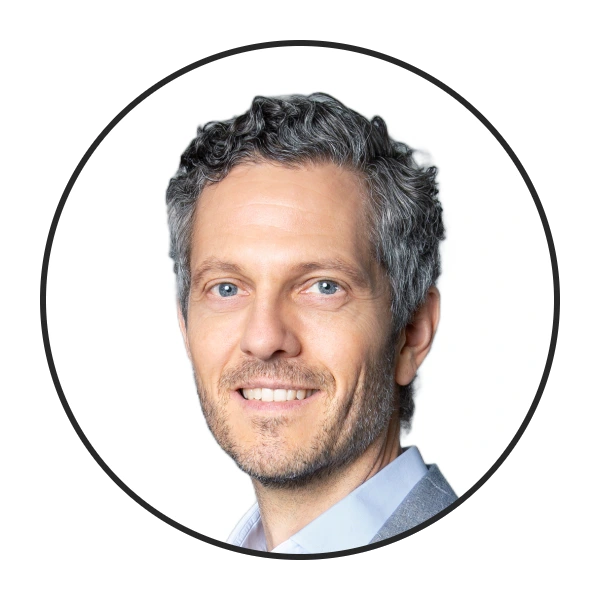
Kaspar Mueller
Chief Underwriting Officer for Property & Casualty Structured Solutions at Swiss Re
A tailored approach
Structured solutions can help insurers manage uncertainty across both future risks and existing liabilities, providing greater flexibility in managing capital over time.
Prospective approaches include structured quota shares, whole-account earnings protection and structured catastrophe protection, while retrospective solutions include loss portfolio transfers and adverse development cover.
In all of this, though, insurers need to keep in mind what their core objective is.
“One of the fundamental questions for an insurer is which risks to retain and which to transfer. There is no universal answer. The right answer depends on the insurer’s cost of capital, regulatory and rating constraints, portfolio composition and tolerance for volatility,” says Mueller.
This is particularly relevant in Asia-Pacific, where diverse market conditions and business needs are driving demand for structured reinsurance across a range of strategic priorities.
“Even two insurers in the same market can have very different objectives,” says Mueller. “You need to consider the local regulatory and accounting environment, how risk transfer is recognised and, most importantly, the client’s individual risk profile, capital position and strategic priorities.”
Successful structured solutions are built on a solid foundation of traditional risk transfer, adding tailored elements of protection to address specific capital, growth, earnings or strategic objectives.
The key is knowing when and how to use each approach.
Kaspar Mueller
Chief Underwriting Officer for Property & Casualty Structured Solutions at Swiss ReStructured catastrophe protection can help manage retained nat cat volatility. A multi-line quota share can help diversify performance across portfolios. Retrospective solutions can address uncertainty already on the balance sheet. Multi-year structures can provide greater visibility over the future cost and availability of protection.
Reinsurance optimisation is often used to look across the programme as a whole and decide which tool best suits each risk.
“The discussion therefore becomes less about buying ‘more’ or ‘less’ reinsurance and more about buying the right reinsurance for the client’s objectives,” says Mueller.
Regulatory capital
Given the diversity of Asia-Pacific’s insurance markets, there is no single driver behind demand for structured reinsurance.
However, the evolution of risk-based capital (RBC) frameworks is emerging as an important factor, influencing how insurers think about capital allocation and balance-sheet efficiency.
While life insurers in the regional hubs of Singapore and Hong Kong have spent the past few years optimising their balance sheets in anticipation of evolving requirements, insurers in other markets – including Malaysia, India, Indonesia and the Philippines – are still assessing how best to position themselves strategically.
This creates a diverse landscape in which the needs of individual insurers between markets, and even within them, vary enormously.
But regulatory capital is only part of the picture. Insurers also need to consider rating and economic capital, return on equity and the capital available to support growth.
“The objective is not simply to maximise regulatory capital relief. It is to find the right balance between risk, capital and expected return,” says Mueller. “That is why reinsurance increasingly forms part of a broader strategic capital discussion, rather than being considered purely as an annual risk-transfer decision.”
Building for an uncertain future
The world has become a far more unsettled place in recent years, with geopolitical and economic volatility showing little sign of abating, while the evolving regulatory landscape adds a further layer of complexity to insurers’ long-term planning.
It’s little wonder, therefore, that structured reinsurance has taken on such a prominent position within the finance functions of many insurance companies.
“The question we increasingly hear from clients is: how can I make my earnings and capital more resilient while continuing to grow?” says Mueller. “That broadens the reinsurance conversation beyond the next renewal and towards the insurer’s strategic objectives over several years.”
Kaspar Mueller
Chief Underwriting Officer for Property & Casualty Structured Solutions at Swiss ReThis isn’t about one market or one particular risk. It reflects a wider trend towards using the versatility that structured reinsurance brings to drive capital efficiency and business growth across the APAC region.
“The opportunity is not necessarily to invent entirely new products, but to combine proven reinsurance tools in different ways, drawing on global structuring experience and local understanding to complement the client’s traditional programme and address their broader objectives,” says Mueller.
“Ultimately, the aim is to strike the right balance between risk, return, volatility and capital in a way that supports the balance sheet and strategic objectives the insurer wants to achieve.”