

(Re)in Summary
- Ziswiler said growing investment in complex infrastructure is driving demand for technical expertise alongside traditional reinsurance capacity.
- Clients across Asia increasingly seek global knowledge tailored to local market conditions, particularly for complex infrastructure and technology risks.
- India and Southeast Asia present the strongest long-term growth potential, while Taiwan’s technology sector and South Korea’s semiconductor investments are creating concentrated exposures.
- Insurers are placing greater value on engineering expertise, capital-management solutions and technical support throughout a project’s lifecycle.
- Ahead of the January 2027 renewals, Ziswiler said prudent risk selection, accumulation management, and appropriate programme structures and wordings remain essential.
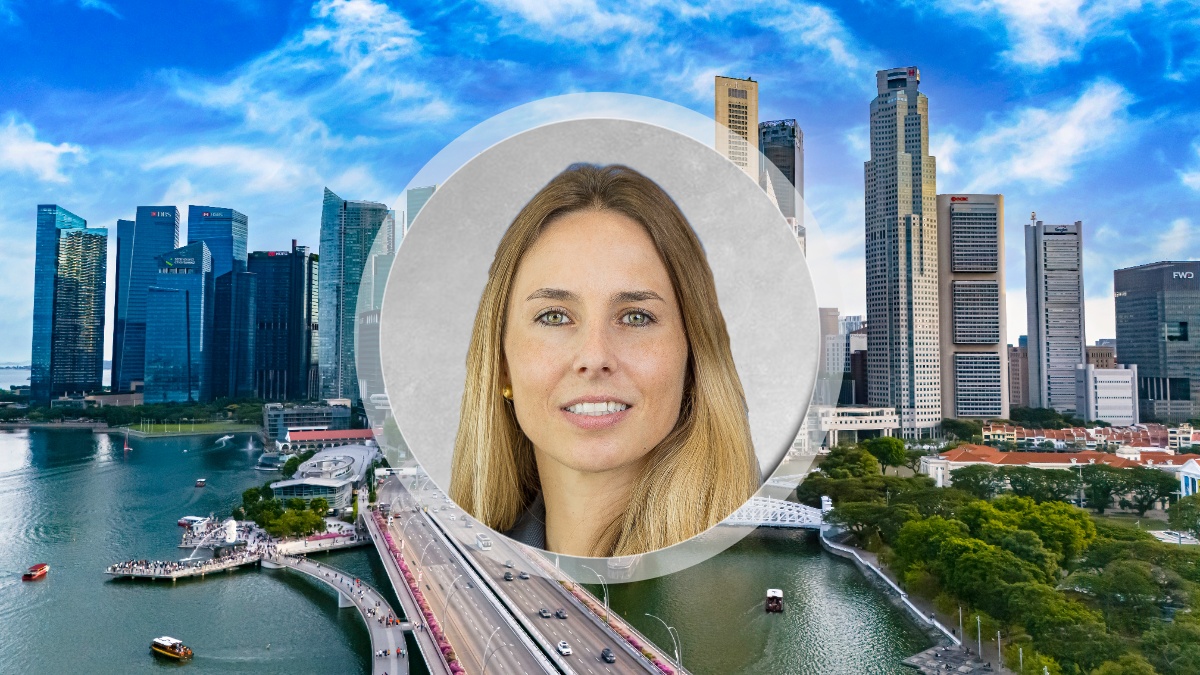
The rapid build-out of data centres, semiconductor manufacturing and energy infrastructure across Asia is creating increasingly concentrated and interconnected risks, pushing insurers to seek engineering expertise and risk-management support alongside traditional reinsurance capacity, Swiss Re’s Anna Ziswiler told (Re)in Asia.
Ziswiler, head of property and casualty (P&C) reinsurance for Southeast Asia, India, Hong Kong, Taiwan and Korea, said the diversity of the region’s markets had been her “strongest observation” since taking on the role in May.
The reinsurance demand is being shaped by different needs across individual markets, ranging from catastrophe protection and infrastructure development to capital management and support for new products.
She also noted that while growing investment in data centres, semiconductors, renewable energy, battery energy storage systems and major infrastructure projects is generating demand, it is also creating concentrated and interconnected risks across the region.
As a result, technical and engineering expertise has also become a key part of Swiss Re’s value proposition, particularly for complex industrial and infrastructure risks.
“Across all these markets, clients are looking for global knowledge, but expect it to be applied with a genuine understanding of their local context,” she said.
In India, for example, clients are increasingly seeking support around capital efficiency, earnings-volatility management and preparations for future risk-based capital requirements.
“Clients value risk insights and engineering expertise across the project lifecycle, from construction through operations,” Ziswiler said.
The reinsurer’s corporate solutions division recently announced exclusive partnerships with Bajaj General Insurance in India in a bid to expand its commercial insurance presence in the market.
“Across all these markets, clients are looking for global knowledge, but expect it to be applied with a genuine understanding of their local context.”

Anna Ziswiler
Head of property and casualty (P&C) reinsurance for Southeast Asia, India, Hong Kong, Taiwan and Korea
At the same time, increasing capacity from domestic reinsurers, foreign reinsurance branches and GIFT City participants has intensified competition in the Indian market, she added.
Gujarat International Finance Tec-City, India’s only international financial services centre, reported 23 reinsurer offices by the end of June 2026, with several notable names such as Kuwait Re, Qatar Re, Singapore Re, Doha Re, Lloyd’s and many others joining the ranks in the last two years.
Different markets, different opportunities
In terms of prospects, India and Southeast Asia continue to offer the strongest long-term growth opportunities, supported by economic development, urbanisation and increasing insurance penetration, according to Ziswiler.
Data centres and AI infrastructure investments are growing across Thailand, Malaysia and Singapore, with Indonesia and the Philippines also developing. Meanwhile, India’s economic development, industrial expansion and infrastructure investment create significant opportunities.
More mature markets, on the other hand, are creating different forms of opportunity. Taiwan’s concentration of high-tech manufacturing within science parks is increasing demand for treaty capacity and structured solutions, while South Korea’s investment in semiconductors, AI-related infrastructure and offshore wind projects is creating new accumulation exposures, she said.
Against this backdrop, Swiss Re expects secondary perils such as flooding, severe storms and extreme rainfall to remain a growing area of focus across Asia. According to Ziswiler, rapid urbanisation, changing land use and growing concentrations of assets can cause risks to evolve faster than historical datasets and models alone can capture.
She pointed to repeated flooding events in Thailand as an example of how changing exposure concentrations continue to reshape risk profiles across the region.
However, she argued that insurance alone cannot close the protection gap. In the first nine months of 2026, the region’s economic losses remained elevated, with major earthquakes, floods and tropical cyclones affecting several markets, according to Gallagher Re.
“Public-private partnerships are essential to advancing risk mitigation, adaptation and effective risk transfer,” Ziswiler said.
She highlighted resilient infrastructure, land-use planning and disaster preparedness as critical measures for reducing losses before disasters occur.
Meanwhile, insurers and reinsurers are developing collaborative solutions to address the increasingly complex risks. MSIG, Gallagher Re, SCOR, Samsung Re and the Cybersecurity Association Singapore are set to launch a Singapore-based data centre insurance facility with US$200m in initial capacity, the Monetary Authority of Singapore announced earlier this week.
“As risks across Asia become more complex and interconnected, clients need more than capacity.”
Anna Ziswiler
Head of poperty and casualty (P&C) reinsurance for Southeast Asia, India, Hong Kong, Taiwan and Korea
Competitive renewals, but discipline remains critical
Ahead of the 1 January 2027 renewals, Swiss Re believes renewal outcomes will continue to vary by market, business line and portfolio performance.
“Prudent risk selection, accumulation management, and appropriate wording and structures remain important,” she said.
The reinsurer expects discussions at the upcoming renewal season to focus on growing concentrations of risk around data centres, semiconductors, critical infrastructure and climate-related exposures.
Secondary perils are also expected to feature prominently. “Secondary perils can no longer be considered secondary in terms of their relevance,” Ziswiler said.
Going forward, Ziswiler’s priorities over the next two years are centred on deepening client relationships.
That means combining technical underwriting, analytics, engineering expertise and tailored risk-transfer solutions around client needs rather than competing solely on capacity.
For clients heading into the 2027 renewals, Ziswiler’s message is that capacity alone is no longer enough.
“As risks across Asia become more complex and interconnected, clients need more than capacity,” she said.