


(Re)in Summary
- Munich Re says insurers are increasingly focused on growth after several years of strong profitability.
- The reinsurer believes competition is shifting from capacity provision towards expertise, solutions and client relevance.
- Pricing remains highly dependent on individual portfolios and loss experience, despite abundant market capital.
- Munich Re continues to see sustainable growth opportunities across Japan, India, Korea and Southeast Asia.
- The company also warned that increasingly interconnected risks are creating larger and more complex loss scenarios.
Primary insurers across Asia are increasingly looking for ways to expand their businesses after several years of strong profitability, creating new opportunities for reinsurers to support product development, innovation and market expansion, according to Munich Re’s Hitesh Kotak, chief executive for Japan, India, Korea and Southeast Asia.
“Many clients are currently looking for ways to grow their business,” Kotak told (Re)in Asia, adding that reinsurers are increasingly being called upon to do more than provide balance-sheet capacity, including facilitating entry into new markets and pursuing expansion strategies.
The growth focus comes at a time when strong reinsurance capitalisation with Guy Carpenter, now Marsh Re, reporting a 19% decline in the catastrophe rate-on-line (ROL) index at the key 1 July renewal season in Asia Pacific.
“The availability of capital and the greater willingness by reinsurers to deploy it have increased the competitive intensity, creating a more buyer-friendly market,” Kotak said.
“Many clients are currently looking for ways to grow their business.” Reinsurers are increasingly being called upon to do more than provide balance-sheet capacity, including facilitating entry into new markets and pursuing expansion strategies.

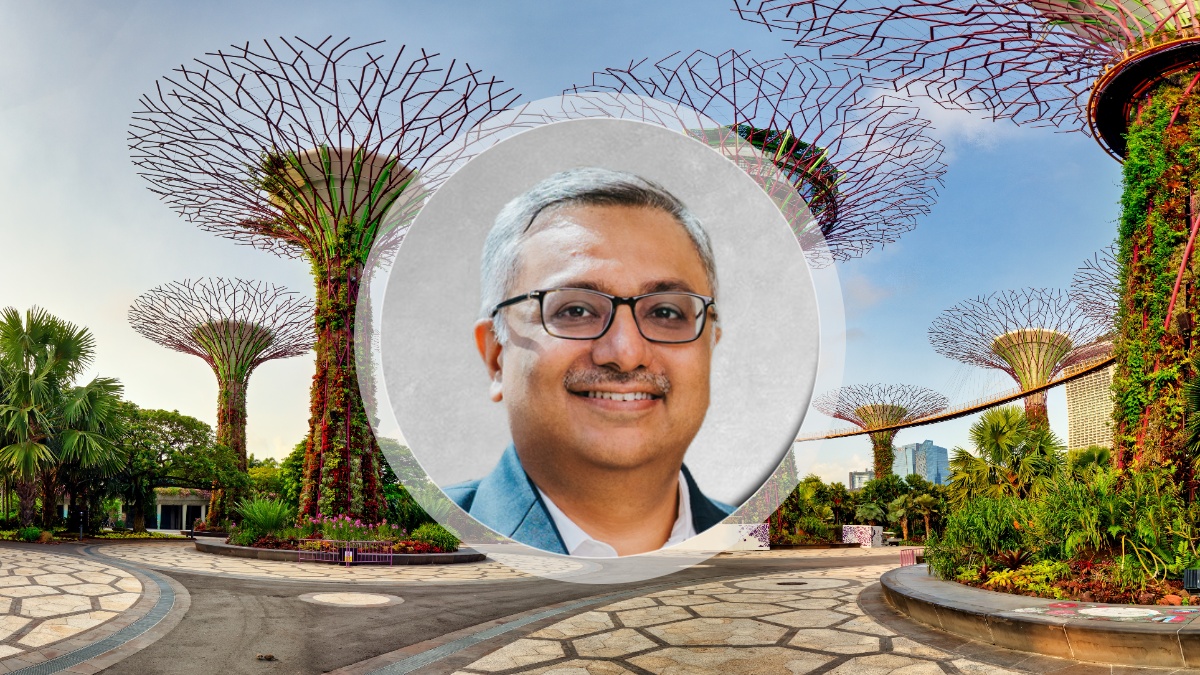
Hitesh Kotak
Chief executive for Japan, India, Korea and Southeast Asia, Munich Re
Nonetheless, Kotak cautioned against viewing the market through a single lens.
“There is no uniform pricing dynamic,” he said. “Pricing depends on the loss activity of each individual programme, treaty or geographies and cannot be generalised.”
He noted that renewal discussions remain driven primarily by individual client and portfolio considerations rather than market-wide pricing trends.
Munich Re’s own April and July renewals reflected that approach, with the reinsurer reducing exposure in selected areas, including proportional business in India and non-proportional catastrophe business in Japan.
“We manage our business based on profitability and long-term client relationships, hence at times we do take deliberate decisions to not renew business that does not meet return expectations or that falls outside of the sustainability parameters,” Kotak said.
He stressed that underwriting quality is critical, as risk assessment depends more on technical understanding than on historical loss patterns.
Against this backdrop, Kotak sees competition changing.
“The key trend is a shift away from competing on capacity alone towards competing on expertise, solutions and client relevance,” he said.
According to Kotak, reinsurers that can provide natural catastrophe expertise, parametric solutions, structured transactions and long-term partnerships are likely to outperform those relying primarily on pricing.
He said this year’s Singapore International Reinsurance Conference (SIRC) theme, From Capacity to Capability, accurately reflects that shift.
Hitesh Kotak
Chief executive for Japan, India, Korea and Southeast Asia, Munich ReThe theme also echoed during this year’s discussions at the Rendez-Vous in Monte Carlo. In September, senior executives from Peak Re, SCOR and Gallagher Re at the Rendez-Vous in Monte Carlo said that Asian cedants are increasingly using favourable market conditions to support growth, expand into new products and markets, and refine risk-transfer strategies.
Hurdles and silver lining
Beyond pricing, Kotak believes the more pressing issue is the growing interconnectedness of risks.
Trade tensions, technology restrictions and regional conflicts are increasing operational uncertainty, while businesses are becoming more dependent on suppliers, technology partners and critical infrastructure providers.
“The common theme is interconnectedness: risks that once appeared isolated are becoming increasingly correlated, creating larger and more complex loss events,” he said.
As for growth, Kotak said Munich Re continues to see attractive opportunities across the markets under his remit.
“We are actually seeing pockets of sustainable growth in all our markets,” he said.
“The topic is not just growth but addressing specific challenges such as affordability, awareness and pricing discipline.”
Munich Re is also paying close attention to emerging areas of economic activity, including artificial intelligence, digitalisation, electrification, hard technology and biotechnology.
“Obviously, we have the ambition to make the specific risks of those new fields insurable and if we succeed doing so, we will inevitably profit from the growth in those fields,” Kotak said.