


(Re)in Summary
- Reinsurance capacity remains abundant for well-understood risks but falls short for hyperscale data centres, where lenders’ required limits often go unplaced.
- Reinsurers carry an estimated 90–95% of data centre risk, with tens of billions in values concentrated on single sites.
- Swiss Re is talking to alternative capital providers to build capacity for peak data centre loss scenarios.
- The average number of links between risks identified by 91 Fortune-100 companies rose 24% between 2019 and 2026, according to a Swiss Re-LSE study.
- Secondary perils such as hail are proving harder to model, raising questions over whether vulnerability, inflation or severity is being underestimated.
Capacity is not reaching the most concentrated new risks as hyperscaler data center projects spring up in response to demand, said Swiss Re P&C reinsurance chief underwriting officer Gianfranco Lot on the third day of the Singapore International Reinsurance Conference (SIRC) on Wednesday (4 November).
“You have abundant capacity and capital for known risks, which are well managed and where the accumulation is very clear,” Lot said during his opening keynote at SIRC. “[But] for risks like data centers, there’s not enough capacity. People are not able to place the insurance limits that are required under governance of debt financing.”
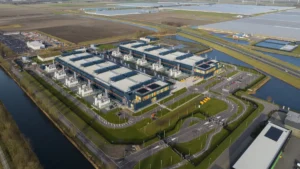
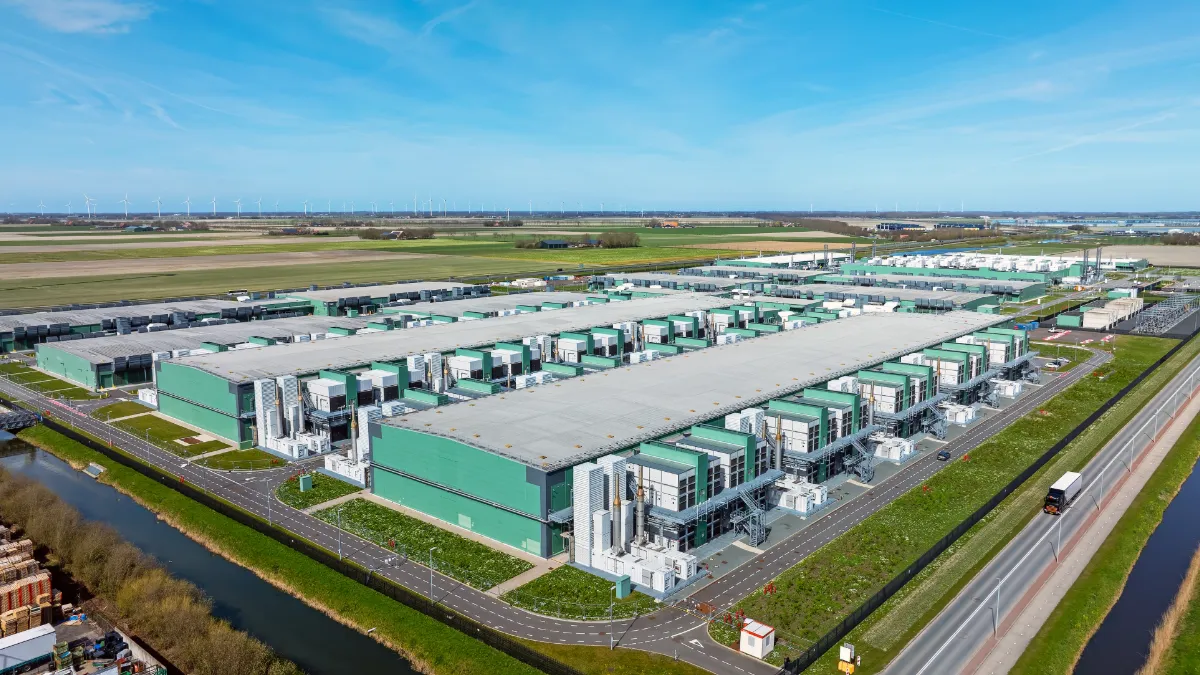
Tens of billions in values can sit on a single site, exposed to tornados, hail, flood and “all sorts of perils,” Lot added, and 90 to 95 percent of these risks are passed on to reinsurers, leading to capacity concerns.
Data center energy use is expected to double and consume up to 3% of the world’s electricity by 2030, according to a International Energy Agency (IEA) report, and global energy investment is expected to reach US$3.4 trillion, with spending rising on rising on renewables, battery storage and grids — a “big, big opportunity”, Lot said.
The speed in which AI hyperscaler data centers are being built also creates a different problem for insurers. Nuclear power plants take 15 to 20 years to build, Lot said, but data centers take just two and a half years.
“So the speed is just massive, and that’s the big difference,” Lot said. “That’s the big difference when it comes to insurance risk, because this risk is single-site accumulation.”
Swiss Re is talking to alternative capital providers to cover peak data centre loss scenarios, as some owners of hyperscale campuses struggle to place the insurance limits lenders require, he added.
“It took us a while to get the accumulation right,” he noted. “We’re talking to a number of people to make sure that we have enough capacity to provide for these huge risks.”
While the risks related to running a data center can be straightforward, the sustainability of finances is a different question. “From a risk perspective, we like the construction risk,” Lot said. “We don’t like the finances, we have question marks about the sustainability of finances.”
Interconnected exposures
Lot warned that exposures are now increasingly interconnected. The average number of links between risks identified by the companies rose 24% between 2019 and 2026, according to research by Swiss Re and the London School of Economics.
The study, which compared firms’ risk disclosures published in 2019 and 2026, saw AI emerging as one of the most connected risks, with the share of firms citing AI and new technology risk rising from 40% to 69%. Climate risk rose from 27% to 58% in the same timeframe.
More frequent secondary perils and greater loss accumulation could also make capital more selective in places where exposure is growing the fastest, the study found.
Over a quarter of US data centres sit in areas with at least three large-hail days a year, and over 40% are in zones of significant to very high tornado risk — and in Taiwan, about 88% of semiconductor plants are in areas of extreme seismic risk.
92% of the nat cat burden in 2026 have been in secondary perils, which are more difficult to model or predict, Lot said. “So the question is, are we underestimating the vulnerability, or are we underestimating the inflation, are we underestimating just the severity of the hail storms, for example?”
Swiss Re continues to invest in natural catastrophe modelling, Lot said, citing its 70 PhDs dedicated solely to nat cat models, as secondary perils such as hail prove harder to estimate.
Asia is particularly prone to new technology risk, he added. as the region embraces technology much faster than other parts of the world.
The reinsurer is looking into emerging technologies and coverage trends like autonomous cars, robotics and space infrastructure, he noted. “There’s a lot of analysis, a lot of investments going into these new technologies.”
Swiss Re welcomes new capital entering the sector, Lot said, because the industry faces many new risks that are all interconnected.
“Make no mistake, the risk exposures are increasingly interconnected… We need all your capabilities to assess this, to make sure we understand risk in a way that we can cover it.”